Books
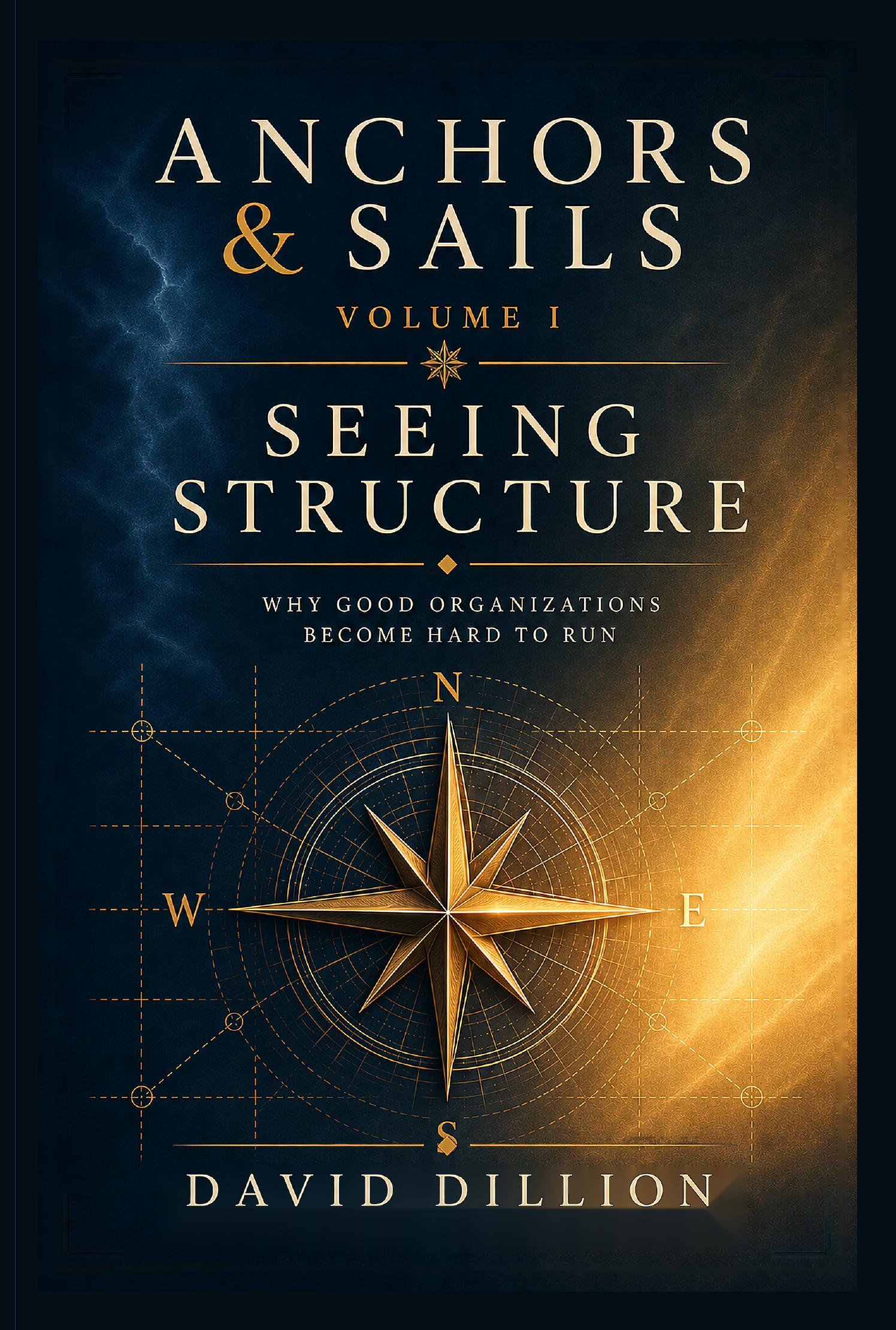
Anchors & Sails, Volume I
Seeing Structure
Good organizations rarely become hard to run all at once. The people are still capable. Leaders are still working. The strategy may still be sound. Yet decisions take longer, ownership becomes harder to define, meetings multiply, and friction settles into the workday as if it belongs there.
The problem is often not effort or talent. It is structure.
Anchors & Sails, Volume I: Seeing Structure gives leaders a disciplined way to recognize the hidden conditions that shape organizational behavior before those conditions become visible failure.
Before leaders can reshape an organization, they must learn to see the organization they actually have. Seeing Structure provides the lens.
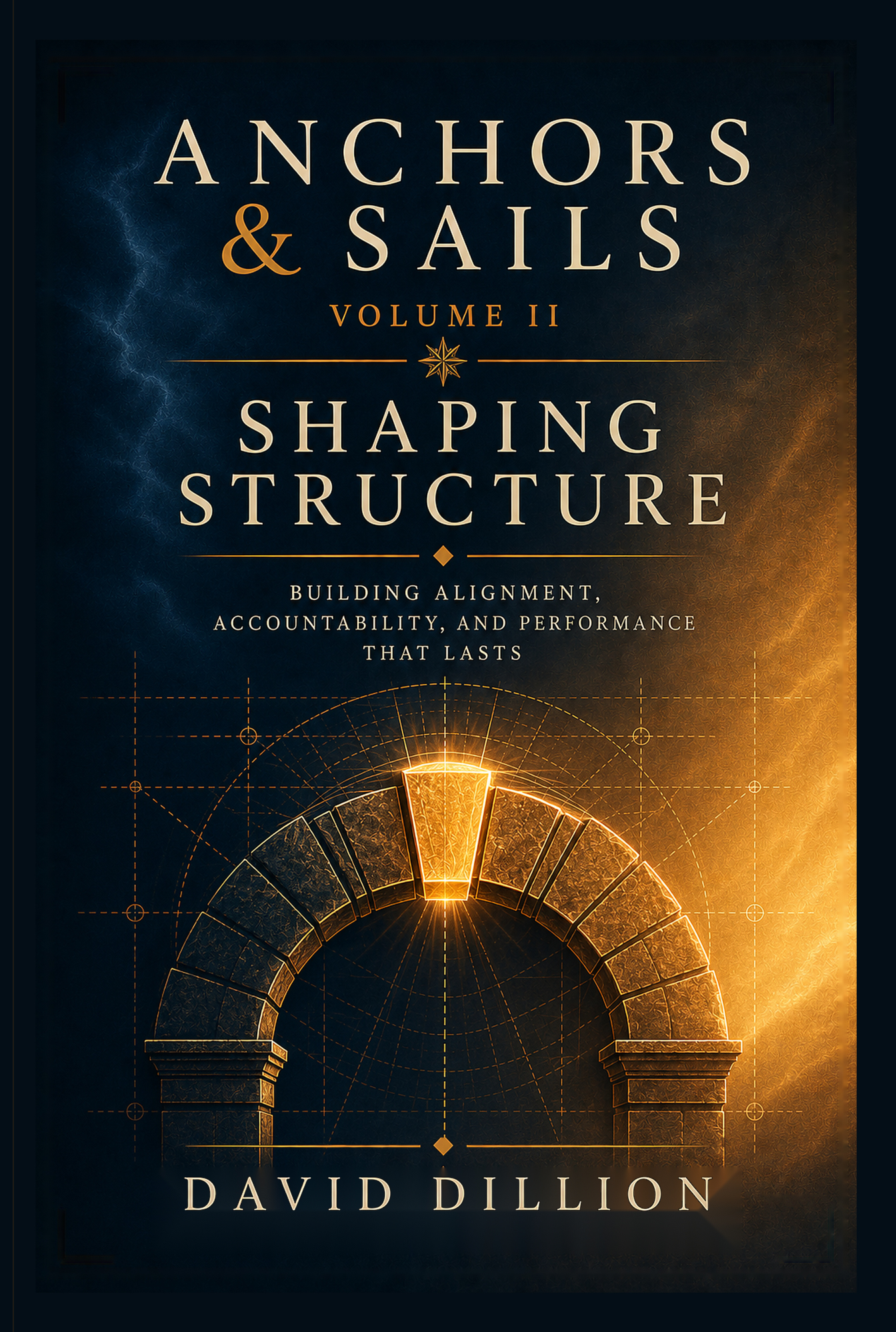
Anchors & Sails, Volume II
Shaping Structure
Seeing structure is only the beginning. Once leaders can recognize the forces shaping an organization, the harder work begins: correcting friction, clarifying authority, repairing decision pathways, and building an environment capable of holding alignment when pressure rises.
Anchors & Sails, Volume II: Shaping Structure moves the doctrine from recognition into application. It examines how leaders can address role drift, cultural signals, structural friction, and the accumulated conditions that make organizations harder to operate than they should be.
The focus is not on introducing another management system. It is on understanding how structure influences execution, accountability, and performance, then deliberately shaping that structure so the organization can operate with greater clarity and consistency.
Shaping Structure explores the relationship between disciplined structure and predictable execution, showing how stronger alignment can improve institutional confidence, reinforce accountability, and create durable enterprise value.
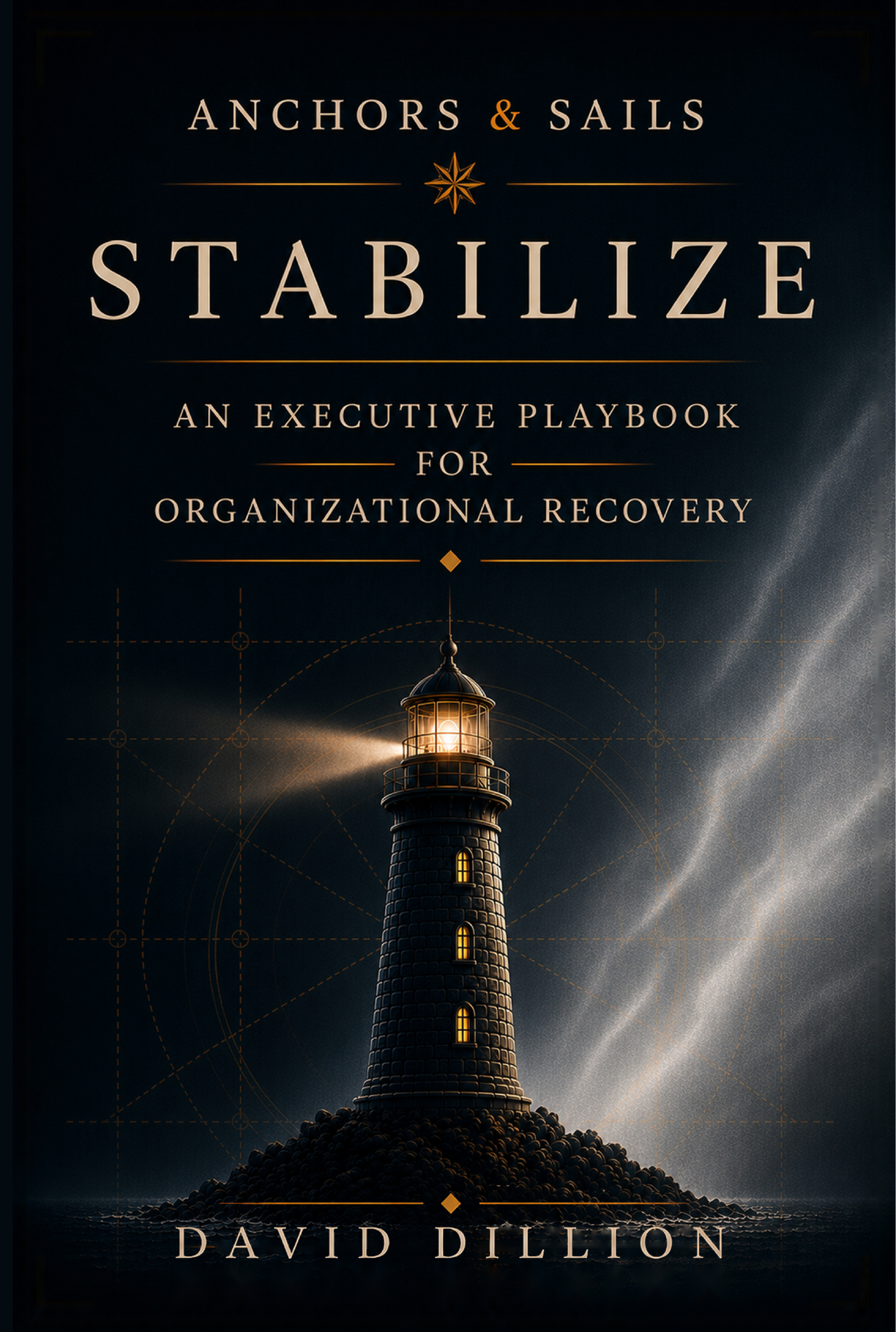
Stabilize
An Executive Playbook for Organizational Recovery
Organizations rarely fail because of one catastrophic decision. They drift through accumulated assumptions, unresolved commitments, unclear authority, and problems everyone has learned to work around.
Stabilize gives leaders a disciplined process for restoring control without creating more damage. Through six recovery phases and two continuing disciplines, it shows how to replace assumptions with evidence, reduce immediate risk, understand what happened, strengthen what matters, and build an organization capable of sustaining the recovery.
The focus is not on transformation for its own sake. It is on regaining stability first, creating enough clarity and control for the organization to make sound decisions again.
Stability is built before it is tested.
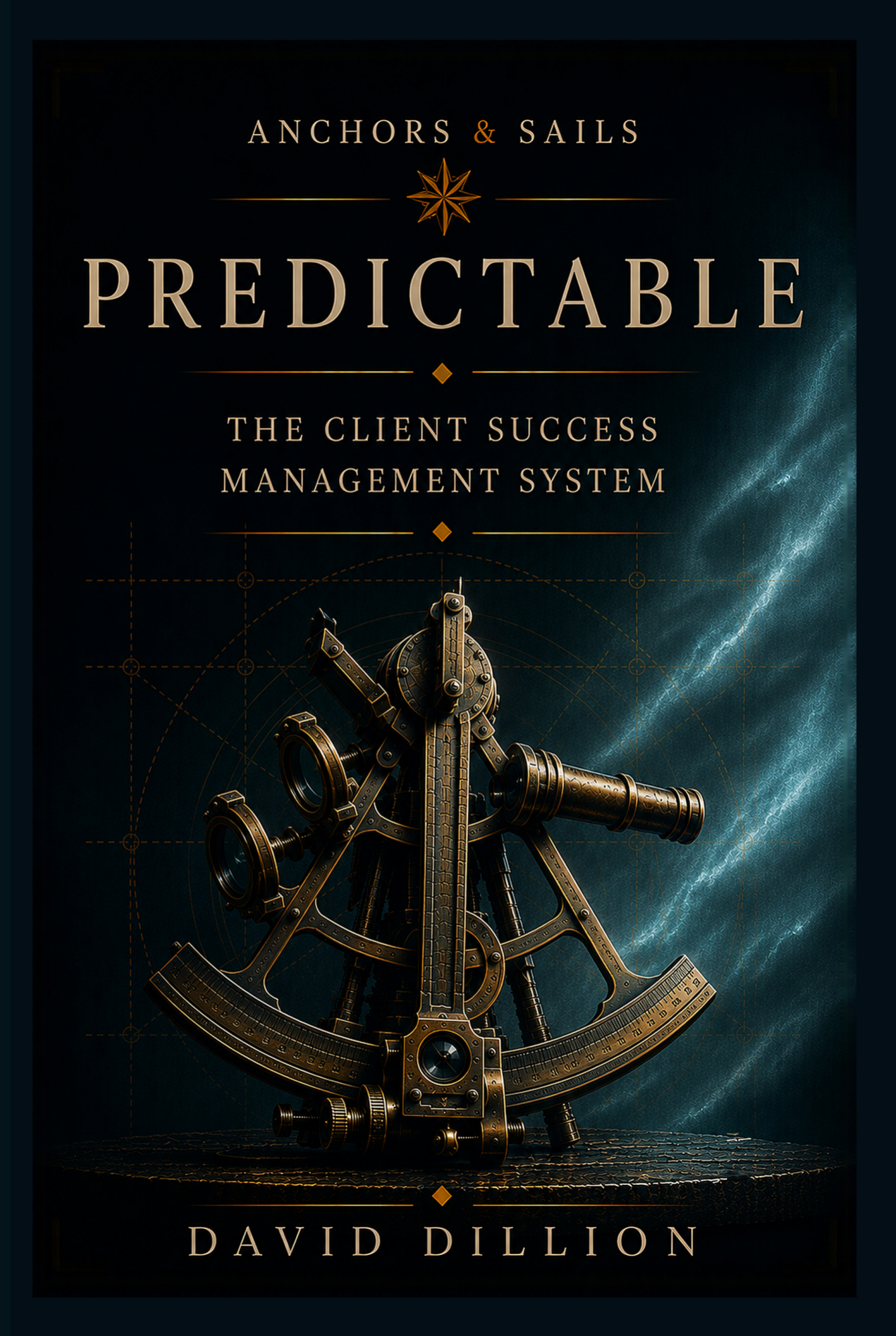
Predictable
The Client Success Management System
Client success is often treated as a collection of good intentions rather than a disciplined operating system. Relationships matter, but without structure, observation, and repeatable method, service quality becomes inconsistent and trust depends too heavily on individual effort.
Predictable presents a client success management system built to create consistency, accountability, and measurable improvement across the client relationship. It centers on a practical operating cycle of observing, querying, interpreting, acting, validating, documenting, and improving so that service becomes more deliberate and less reactive.
The focus is not on theory for its own sake. It is on creating a usable framework that helps organizations strengthen client experience, surface risk earlier, and produce more reliable outcomes over time.
Predictability in client success is not accidental. It is built through disciplined practice.
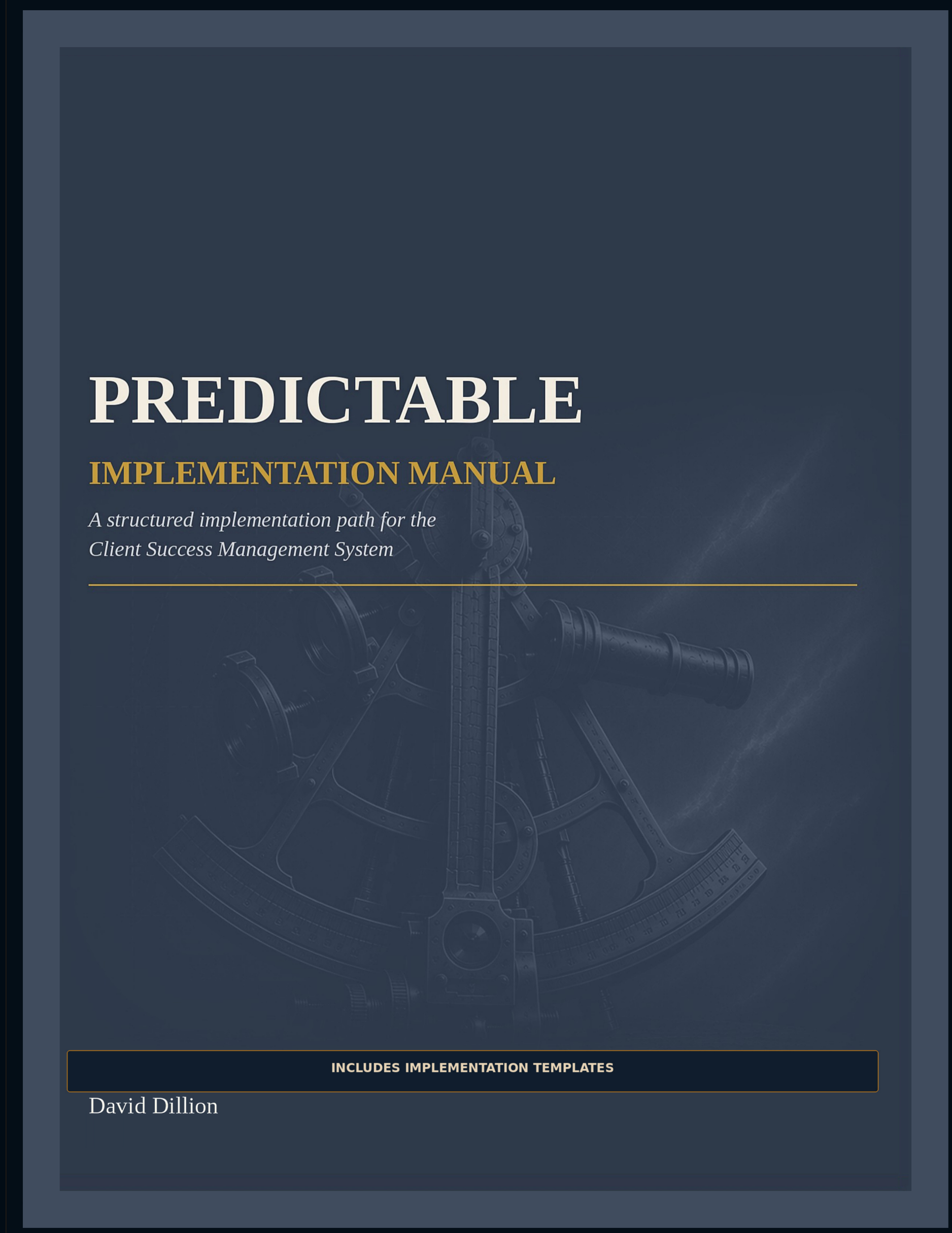
Predictable Implementation Manual
A structured implementation path for the Client Success Management System
The Predictable Implementation Manual turns the Client Success Management System into a structured organizational build. Ten modules move from readiness and relationship baselining through Anchors, Sails, Compass, governance, maturity, drift correction, and scale.
Every module produces observable evidence and a defined deliverable, giving teams a practical way to build, test, and document implementation rather than relying on informal adoption.
The manual is designed for executive sponsors, client-success leaders, and operating teams that need a repeatable path from doctrine to execution.
It also includes implementation templates that provide working pages for documenting the build, tracking completion, and leaving behind usable organizational assets.